Solitaire Engagement Rings: Styles, Settings, and How to Choose One

The most iconic engagement rings often share one defining characteristic: simplicity. For generations, the solitaire has been a symbol of enduring style, proving that a single, beautifully chosen diamond can make a lasting impression. While the design itself is elegantly straightforward, the variety of settings, diamond shapes, and design details available today offers endless opportunities for personalization.
From classic solitaire engagement ring settings to modern interpretations, this guide explores the most popular solitaire engagement ring styles and what to consider when choosing the right one.
TABLE OF CONTENTS
What Is a Solitaire Engagement Ring?
A solitaire engagement ring is the ultimate definition of "less is more." Featuring a single diamond set on a plain band, this iconic style showcases the beauty, brilliance, and shape of the stone. Without accent stones or additional design elements, the overall look is clean and refined, allowing the diamond, proportions, and craftsmanship to take precedence.
While the design is straightforward, solitaire engagement rings offer countless opportunities for customization through different diamond shapes, metal choices, and setting styles. A round diamond in yellow gold creates a very different look than an emerald cut in platinum or an oval diamond set in a bezel setting. These design elements allow you to personalize the ring while preserving the clean, elegant aesthetic that has made the solitaire a lasting favorite.
Why Choose a Solitaire Engagement Ring?
There’s a reason solitaire engagement rings have remained one of the most popular engagement ring styles for decades. Their clean, versatile design works beautifully with virtually every diamond shape and pairs effortlessly with wedding bands, anniversary rings, or future ring stacks.
Another advantage is that a solitaire allows more of your budget to go toward the center diamond rather than additional accent stones or elaborate detailing. For many buyers, this creates an ideal balance between beauty, quality, and value.
The History and Meaning of Solitaire Engagement Rings
The tradition of giving engagement rings dates back centuries, but one of the earliest recorded diamond engagement rings appeared in 1477 when Archduke Maximilian of Austria presented a diamond ring to Mary of Burgundy. At the time, diamonds were exceptionally rare and reserved for royalty and the aristocracy.
As diamond production increased and engagement ring traditions became more widespread, solitaire designs gained popularity for their elegant simplicity. By the 20th century, the solitaire diamond ring had become the defining symbol of engagement. Today, it remains the most popular engagement ring style, valued for its enduring beauty and universal appeal.
Popular Solitaire Ring Settings
While the diamond often gets the most attention, the setting plays an equally important role in defining the ring's overall appearance. The same diamond can feel traditional, modern, minimalist, or architectural depending on how it is set. Understanding the differences between popular solitaire engagement ring settings can help you choose a design that aligns with both your aesthetic preferences and lifestyle.
Prong Setting
The prong setting is the most recognizable and widely chosen solitaire engagement ring setting. Small metal prongs hold the diamond in place while leaving much of the stone exposed, allowing maximum light exposure and sparkle.
Most solitaire rings feature either four or six prongs. Four-prong settings create a cleaner, more open appearance and can make a diamond appear slightly larger. Six-prong settings offer additional security and are often preferred for larger diamonds or for those who prioritize durability.
Prong settings are a versatile choice for buyers seeking a traditional solitaire design.
Cathedral Setting
A cathedral setting features graceful arches that extend upward from the band to support the center diamond. Inspired by the architecture of cathedral ceilings, this design adds height and visual presence to the ring while creating a more intricate profile.
Bezel Setting
In a bezel setting, a thin rim of metal surrounds the diamond, creating a sleek and contemporary look. Because the stone is enclosed rather than held by exposed prongs, bezel settings offer exceptional protection against everyday wear.
The style has become increasingly popular in recent years as engagement ring trends have shifted toward clean lines, minimalist design, and practical wearability. Oval, round, emerald, marquise, and pear-shaped diamonds are especially striking in bezel settings, as the metal frame highlights their distinctive silhouettes.
For buyers seeking a modern solitaire engagement ring that balances style with durability, the bezel setting is often one of the strongest options.
Hidden Halo Setting
A hidden halo incorporates a circle of small diamonds beneath the center stone, adding extra brilliance that is visible from the side while remaining discreet from the top view.
The appeal of a hidden halo lies in its subtlety. Unlike a traditional halo, which dramatically changes the ring's appearance, a hidden halo enhances the center diamond without altering the clean aesthetic of a solitaire. It can also create the illusion of a larger center stone by adding light and dimension beneath it.
Hidden halos have become one of the most requested engagement ring details in recent years, particularly among buyers who appreciate understated design but still want a touch of additional sparkle.
Choosing the Right Diamond Shape for a Solitaire Ring
The beauty of a solitaire engagement ring lies in its ability to showcase virtually any diamond shape. Each cut brings its own character, influencing everything from sparkle and finger coverage to overall style. Whether you prefer a classic round diamond or a more distinctive fancy shape, With Clarity offers a wide selection of diamond cuts to suit every aesthetic.
Round Solitaire Engagement Ring
Round brilliant diamonds remain the most popular diamond shape, accounting for the majority of engagement ring purchases. Their enduring appeal comes from exceptional light performance. Featuring 58 precisely arranged facets, a round brilliant cut is designed to maximize the return of light, producing unmatched fire, brilliance, and scintillation. For buyers seeking maximum sparkle and a shape that works beautifully in every setting style, a round solitaire remains the benchmark against which all other diamonds are measured.
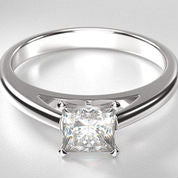
Princess Cut Solitaire Engagement Ring
Princess cut diamonds are prized for their sharp corners, contemporary geometry, and impressive brilliance. As the most popular square diamond shape, they appeal to buyers who want substantial sparkle while favoring a more modern aesthetic than a traditional round diamond..
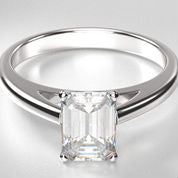
Emerald Cut Solitaire Engagement Ring
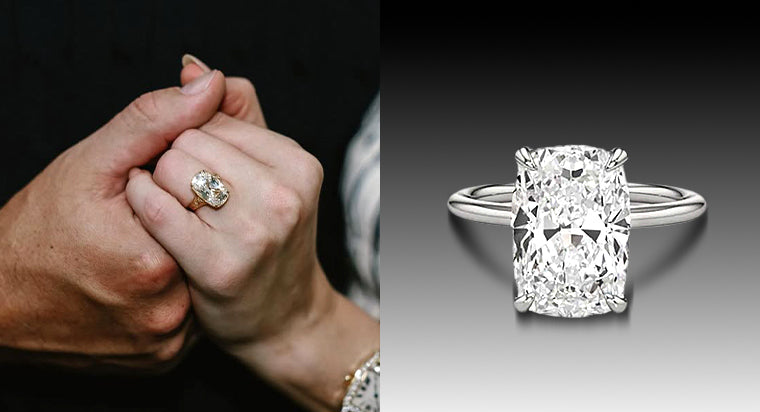
Emerald cut diamonds offer a completely different type of beauty. Rather than prioritizing sparkle, their long step-cut facets create a dramatic hall-of-mirrors effect that emphasizes clarity and transparency. The clean, architectural lines of an emerald cut appeal to buyers who appreciate understated luxury and sophisticated design. Engagement ring shoppers have been putting a literal spin on this diamond cut with East-West rings that turn the long diamond on its side.

Oval Solitaire Engagement Ring
Oval diamonds have experienced a significant rise in popularity over the last decade, fueled in part by celebrity engagement rings and a growing preference for elongated diamond shapes. Combining the brilliance of a round diamond with a more elongated silhouette, ovals often appear larger than round diamonds of the same carat weight. Their length can also create the illusion of longer, slimmer fingers, making them one of the most flattering and versatile choices for a solitaire setting.
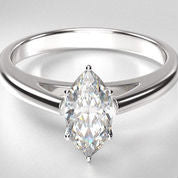
Marquise Solitaire Engagement Ring
Originally commissioned by King Louis XV of France, the marquise cut is one of the most distinctive diamond shapes available. Its elongated silhouette with pointed ends creates exceptional finger coverage, often making the diamond appear larger than other cuts of the same carat weight. As engagement ring trends continue to embrace elongated shapes, marquise diamonds have seen a strong resurgence among buyers looking for something both dramatic and unconventional.
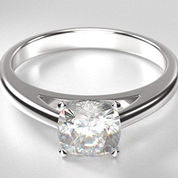
Cushion Solitaire Engagement Ring
Cushion cut diamonds are known for their soft corners and romantic appearance. Often described as a cross between a round and square diamond, they combine vintage-inspired charm with impressive brilliance. Cushion cuts have remained a favorite among celebrities and designers alike, offering a softer, more romantic alternative to sharper geometric shapes.
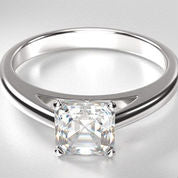
Asscher Cut Solitaire Engagement Ring
The Asscher cut shares the step-cut faceting style of the emerald cut but features a square shape and cropped corners. Originally developed during the Art Deco era, it is known for its remarkable symmetry and depth. Its concentric facet pattern draws the eye inward, creating a captivating visual effect that feels both vintage and architectural.
Are Solitaire Engagement Rings More Expensive?
Not necessarily. While solitaire engagement rings often feature a single center diamond, their overall cost depends on factors like the diamond shape, size, quality, and the metal used for the setting.
In fact, a solitaire setting is often one of the most budget-friendly engagement ring styles because it doesn't require additional accent stones or intricate detailing. Instead of paying for a more elaborate design, more of your budget can go toward the center diamond itself.
How to Choose a Solitaire Engagement Ring
Because a solitaire engagement ring places all the attention on a single diamond, every design decision carries more visual impact. When narrowing down your options, keep these considerations in mind:
Start with the diamond shape
Think of the shape as the foundation of the ring. It has the greatest influence on the ring's overall aesthetic and can help guide many of the design decisions that follow. Many buyers find it easier to narrow their options once they've identified the shape that best reflects their personal style.
Prioritize cut quality.
Because the diamond is the focal point in a solitaire engagement ring, its light performance matters. A well-cut diamond will appear brighter, more lively, and more visually appealing, helping it make the most of its carat weight.
Shopping advice:
When evaluating fancy shapes such as oval, pear, marquise, or emerald cuts, pay attention to factors like symmetry, length-to-width ratio, and overall visual appeal rather than focusing solely on carat weight. For round diamonds, consider Excellent or Ideal cut grades whenever possible, as these are designed to maximize brilliance, fire, and sparkle.
Consider how you'll wear the ring
Your daily routine can influence which solitaire style makes the most sense. If you work with your hands frequently or lead an active lifestyle, a lower-profile setting or protective bezel setting may be worth considering. Those who spend less time in hands-on environments may have more flexibility to prioritize aesthetics over practicality. Choosing a ring that complements your lifestyle can help ensure it remains comfortable and secure for everyday wear.
Consider how the ring will pair with a wedding band
Many people wear their solitaire engagement ring alongside a wedding band and may add anniversary or eternity rings over time. Considering how the ring will pair with other rings can help ensure the overall look feels balanced and cohesive. This is particularly important for distinctive shapes such as pear and marquise diamonds, which often pair best with contoured wedding bands designed to follow the shape of the center stone.
Make the most of your budget.
Choosing a diamond just below popular milestone weights, such as 0.90 or 1.90 carats, can offer meaningful savings with little noticeable difference in size.
Conclusion
Few engagement ring styles have remained as relevant as the solitaire. Defined by a single diamond and a clean, uncluttered design, it offers a level of versatility that works across every generation and aesthetic.
Whether you’re drawn to a classic prong setting, a modern bezel, or a hidden halo, there’s a version of this timeless style that fits every personality and every love story. Its simplicity is precisely what makes it enduring—and why it continues to be the ring against which all others are measured.
FAQs
What is a solitaire engagement ring?
How to know if a solitaire engagement ring is right for you?
What are the most popular solitaire ring settings?
Are lab-grown solitaire engagement rings more affordable?
Which diamond shapes work best in solitaire settings?